How to Find an NDIS Provider in Sydney and Actually Get One With Availability
· 9 min read
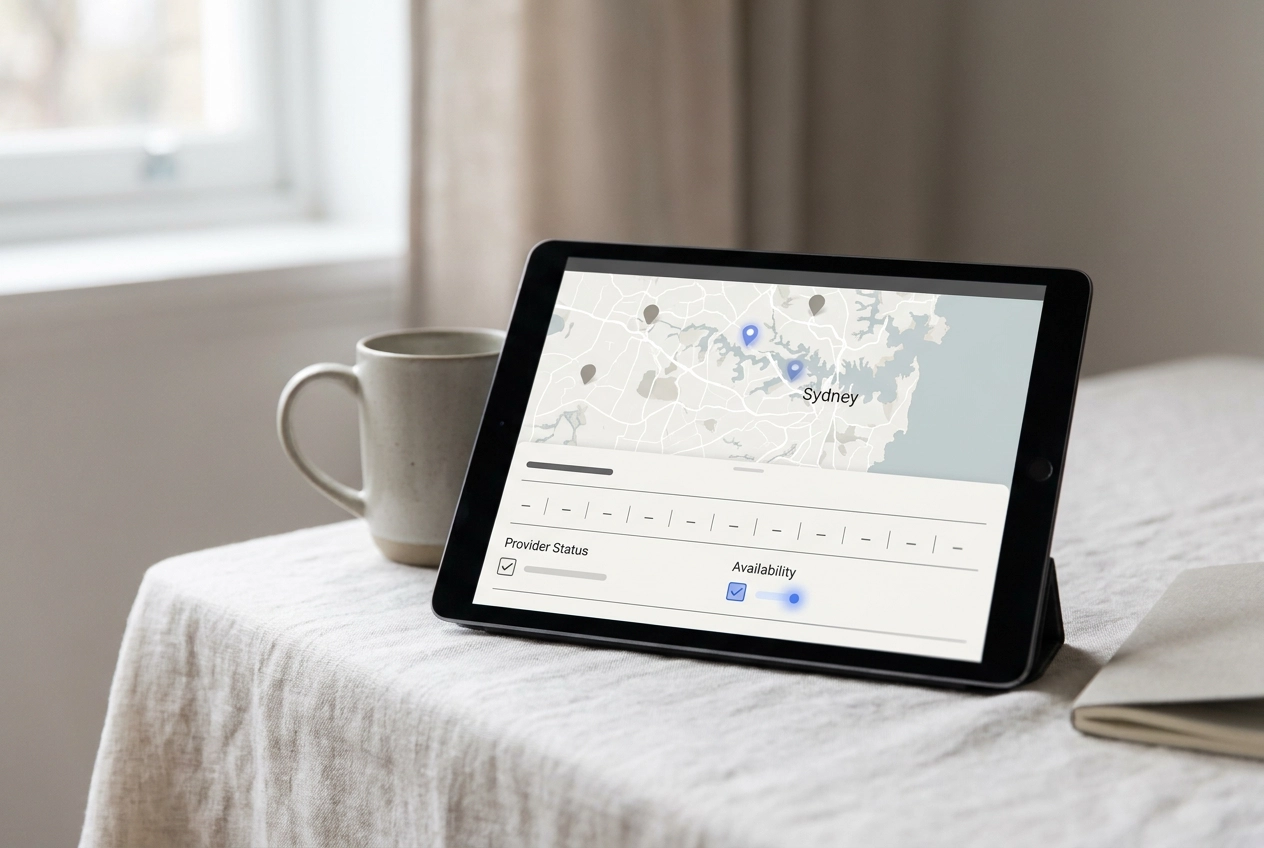
Finding an NDIS provider in Sydney sounds straightforward until you actually try to do it. You search a directory, find dozens of providers, make a few calls, and quickly discover that availability is another matter entirely. Many providers are registered, listed, and simply not taking new participants.
This guide cuts through that frustration. Whether you are new to the NDIS or helping a family member navigate it for the first time, understanding how the system actually works will save you significant time and stress. Provider registration is overseen by the NDIS Quality and Safeguards Commission, and recent legislative changes signal ongoing government efforts to improve market sustainability and service quality across Australia.
In the sections ahead, you will learn what provider registration actually means, how to verify a Sydney provider's credentials, which support categories have the most availability, and what questions to ask before you commit. You will also learn how modern provider directories are solving the availability gap that traditional listings have never addressed. By the end, you will have a clear, practical process for finding an NDIS provider in Sydney who is both qualified and ready to support you.
What It Actually Means for a Provider to Be NDIS Registered
NDIS registration is issued and monitored by the NDIS Quality and Safeguards Commission, a body that is separate from the NDIA (the agency that manages your plan and funding). Many families conflate the two, but they have distinct roles. The Commission sets and enforces provider standards; the NDIA administers participant plans.
Registration is not automatic or universal. It is legally required only for providers delivering certain support types, particularly those classified as higher risk. A provider must apply for registration against specific support categories or groups, and approval in one category does not carry over to others. A provider registered to deliver daily personal activities is not automatically approved to deliver behaviour support or supported independent living. These are separate registration groups with separate requirements.
Once registered, providers must comply with the NDIS Practice Standards and undergo either a verification audit or a more intensive certification audit, depending on the risk level of the supports they deliver. Higher-risk categories such as specialist behaviour support or complex personal care trigger the certification pathway, which involves a more rigorous, independent assessment.
It is also worth knowing that the distinction between registered and unregistered providers matters significantly when you are choosing who to engage. Unregistered providers can legally deliver some supports to self-managed and plan-managed participants, so a long listing of providers does not, by itself, confirm compliance level.
The stakes for getting this right are rising. From 1 July 2026, providers of Supported Independent Living (SIL) must be registered, and the NDIS Amendment (Securing the NDIS for Future Generations) Act 2026 received Royal Assent on 20 August 2026. For a practical walkthrough of how to find the right NDIS provider for your needs under these updated rules, the next sections cover verification step by step.
How to Verify a Sydney Provider's Registration and Worker Clearances
Knowing registration exists is only half the job. Here is how to confirm it holds up.
Check the public provider register first. The NDIS Quality and Safeguards Commission maintains a searchable register where anyone can look up a provider by name or ABN. The results show current registration status, which support categories are covered, and may show any conditions on the registration. This takes minutes and costs nothing.
Treat worker clearances as a separate check. Provider registration does not automatically cover every worker on the team. Staff in risk-assessed roles must hold an individual NDIS Worker Screening Clearance. Ask the provider for each relevant worker's clearance number, then verify it against the Worker Screening Database. A clearance number that does not match the worker's name in the database is a serious problem, not a paperwork oversight.
Request the registration certificate directly. Ask the provider to supply their registration certificate and list the specific registration groups it covers. Cross-reference those groups against the line items in your NDIS plan. Signing a service agreement without verifying your provider's registration status against your actual funded supports creates billing and compliance risk that can be easily avoided.
Know the red flags. Walk away, or investigate further, if a provider cannot produce a registration certificate on request, if a worker's clearance number does not match Commission records, or if the business name you are dealing with does not match the one on the Commission's register.
Use the NDIA's Data Research portal as a secondary check. The portal publishes provider datasets filterable by state, support class, and participant type, giving families an independent source to cross-reference any Sydney provider before making contact.
Which Support Categories Are Most Available Across Sydney
Sydney has a significant number of registered NDIS providers, though density varies across the city. In general, outer growth areas tend to have fewer providers per capita than inner-city areas, so participants in those regions may have a shorter shortlist. You can browse providers in Sydney to get a practical sense of what is registered near you.
Therapeutic supports are the most pressured category. Occupational therapy, speech pathology, and psychology practices across Sydney frequently carry waitlists that can extend considerably, particularly for high-frequency or specialist needs. Raw provider counts in this category look reasonable on paper; actual intake capacity is another matter.
Support coordination and plan management are comparatively more accessible across metro Sydney. The caveat is that capacity for complex or high-needs participants, those with dual diagnoses, behaviours of concern, or intensive plan requirements, remains tighter than the headline numbers suggest.
SIL and SDA represent the most constrained category of all. Vacancies in these categories shift quickly and are rarely published in a centralised, up-to-date way. By the time a vacancy appears in a standard listing, it is often already filled.
Community participation and social support providers are more broadly available, but Sydney's cultural and linguistic diversity introduces a significant variable. Not all providers have the language capacity or cultural competency to serve participants from culturally and linguistically diverse backgrounds, and standard searches rarely surface this information.
The Availability Problem Most Directories Do Not Solve

Even when you identify a provider type that should have capacity, most directories cannot tell you whether any specific provider is actually accepting new clients today.
The result is a familiar pattern: a family searches, finds providers in their area, rings each one, and hears "we're not taking new referrals right now" enough times to lose days or weeks of funded support time. Support coordinators regularly report contacting multiple providers before finding one with genuine capacity. Those delays are not administrative inconveniences; they push back the start of supports that participants are entitled to use.
CareLocate is built around closing this specific gap. Providers who manage their listing can confirm whether they are accepting new clients, and the listing shows the date they last did so. If that date is old, or there is none, you know to treat availability as unconfirmed and ask directly.
What to Ask a Sydney NDIS Provider Before You Commit
Once you have found a provider with genuine capacity, the next step is asking the right questions before you sign anything.
- Confirm registration group alignment with your plan line items. A provider registered under a broad support category is not automatically approved to deliver every service within it. Ask them to specify which registration groups they hold and cross-check these against the exact line items in your NDIS plan. Billing for out-of-scope supports creates plan management complications and triggers NDIS audit risk.
- Request worker clearance numbers upfront. Ask for the full names and NDIS Worker Screening Clearance numbers of the workers who will actually deliver your supports, then verify each one against the Worker Screening Database before services begin, not after a concern arises.
- Read the service agreement carefully. Request the agreement before any supports start and review three specific clauses: the notice period required to exit, the cancellation policy, and the complaints and dispute resolution process. Registered providers must have a complaints process that meets NDIS Commission requirements.
- Get capacity confirmation in writing. A verbal "probably" is not enough in a tight labour market where rosters change quickly. Ask whether the provider can service your specific suburb and support schedule, and request written confirmation of those details before services begin.
- For SIL or SDA, ask about staffing ratios and incident reporting. Residential arrangements carry additional obligations. Registered providers must notify the NDIS Commission of serious incidents within 24 hours. Ask how the provider documents incidents, what their after-hours support protocols are, and what staffing ratios apply to your arrangement.
How CareLocate's Sydney Provider Directory Works
Once you have your questions ready, knowing where to search makes the process significantly faster.
CareLocate draws its listings from the NDIS Quality and Safeguards Commission's public register, covering more than 6,000 businesses nationally. Sydney results can be searched by suburb and support category, and listings show whether the provider has told us they are accepting new clients, with the date they last confirmed.
That confirmation date matters more than it might seem. A provider who was taking new clients some months ago may have filled their roster since. For categories like supported independent living, where vacancies shift quickly and are rarely published anywhere centrally, this timestamp is particularly useful.
Providers can claim their own listing to keep that status current and receive direct enquiries from participants, families, and support coordinators. This removes the need to manage a separate waiting list or field repeated cold calls from families who have already been turned away elsewhere.
For support coordinators managing caseloads across multiple Sydney postcodes, this saves time. Rather than working through a list of names to find out who is even accepting referrals, you can start with the providers in a given area who have recently confirmed capacity.
Finding the Right Sydney NDIS Provider Is a Process Worth Getting Right
The tools and process covered in this guide exist because the consequences of getting it wrong are real: delayed supports, billing complications, and in the worst cases, engagement with providers who should never have passed scrutiny.
Keep these four steps front of mind as you search:
- Verify before you engage. Use the NDIS Commission's public register to confirm a provider's current registration status and the support categories it covers, and check NDIS Worker Screening Clearance numbers for anyone who will deliver supports directly. Do this before services begin, not after a concern arises.
- Treat any directory listing as a starting point. Registration and availability are separate facts. Always ask a provider directly whether they can take you on at your location and on your schedule, and get that confirmation in writing.
- Factor in the regulatory context. The government is actively tightening market oversight, making provider legitimacy checks more important than ever.
- Start your search where capacity is visible. Search Sydney by suburb and support category, and prioritise registered providers who have recently confirmed they are taking new clients.
Finding a good provider takes effort. These steps make sure that effort is not wasted.
Conclusion
Finding an NDIS provider in Sydney who is registered, qualified, and actually available takes more than a quick directory search. The process described in this guide treats verification and availability as separate tasks that each require a direct answer, because a provider who looks right on paper but cannot deliver supports at your location or within your schedule helps no one.
Start your search on CareLocate today. Search by suburb and support category, compare providers who have confirmed current availability, and move forward with confidence. The right provider is out there; these steps help you find them faster.
Find NDIS providers on CareLocate
Search by category, location and who is actually accepting clients. Free to search and independently owned.
Search providers →